NOMs and non-tariff regulations: how to avoid holds at customs
When goods are held at the customs facility, the cause is rarely the tariff. It is almost always a non-tariff regulation that was not anticipated: a Mexican Official Standard (NOM), a prior permit, a health notice, or a restriction specific to that tariff code. This guide explains what they are, why they hold up so much cargo, and how to anticipate them before you buy.
What non-tariff regulations are
They are requirements other than paying taxes that goods must meet to enter the country. They exist to protect health, safety, consumers and the environment. Unlike the tariff —which is a number— these regulations are conditions: they are met or they are not, and without them the goods simply do not pass.
NOMs: the most frequent cause
Mexican Official Standards set technical, labeling, safety or commercial-information specifications. Many consumer products —electronics, textiles, appliances, food— must comply with one or more NOMs and prove it with a certificate or a certificate of conformity. The typical problem is not that the NOM exists, but that the importer finds out about it after the goods are already in transit or at customs.
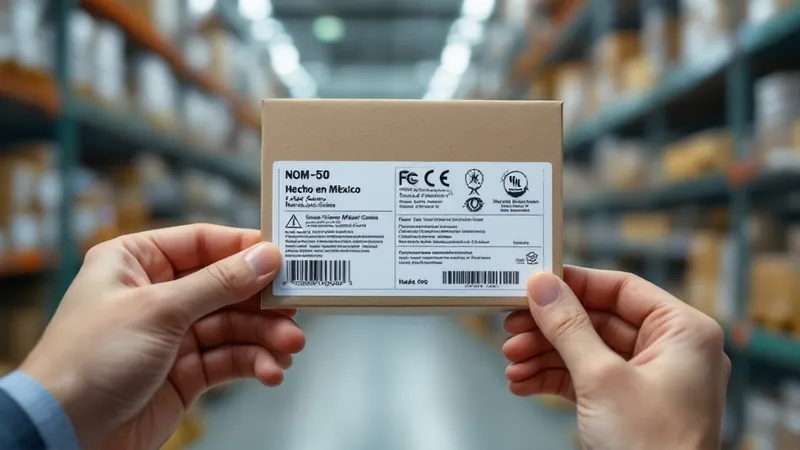
NOM labeling is often discovered too late. Re-labeling at the customs facility is expensive and slow; doing it at origin, before shipping, costs a fraction.
Other restrictions that hold up cargo
- Prior permits from specific agencies depending on the product type.
- Health notices and registrations for food, cosmetics, medical devices.
- Efficiency or safety certifications for certain equipment.
- Quotas and restrictions applicable to certain goods or origins.
How to anticipate them before you buy
The golden rule is simple: the regulatory assessment comes before the purchase order, not after. When you know the correct tariff code and its applicable regulations before paying the supplier, you can still require the labeling, certificates and notices as a condition of purchase. Afterward, it becomes your problem and your cost.
- Classify the product correctly to know its tariff code and requirements.
- List the NOMs, permits and notices applicable to that code.
- Pass those requirements to the supplier as part of the order and the shipping documentation.
Where artificial intelligence fits in
Identifying which regulations apply to a product used to require expertise and hours of research. An AI feasibility-analysis skill can, from the spec sheet and product photos, propose the classification and flag the likely NOMs and non-tariff regulations before you place the order. It does not replace the specialist's judgment, but it turns a review of days into one of minutes and prevents you from learning about a requirement when it is already too late.
Anticipating is cheaper than reacting. The difference between a smooth operation and a held one is usually decided weeks before the goods reach customs.
Assess your product before you buy
Tariff classification, NOMs and non-tariff regulations with AI, from the spec sheet. Free to start.
Analyze your product freeThis content is for guidance only and is not legal, technical or tax advice. The applicable NOMs and non-tariff regulations depend on the tariff code and the product; always verify current requirements with your customs broker and the competent authorities.